
How BIM Transforms Architecture into a Data-Driven Advantage
How BIM Transforms Architecture into a Data-Driven Advantage
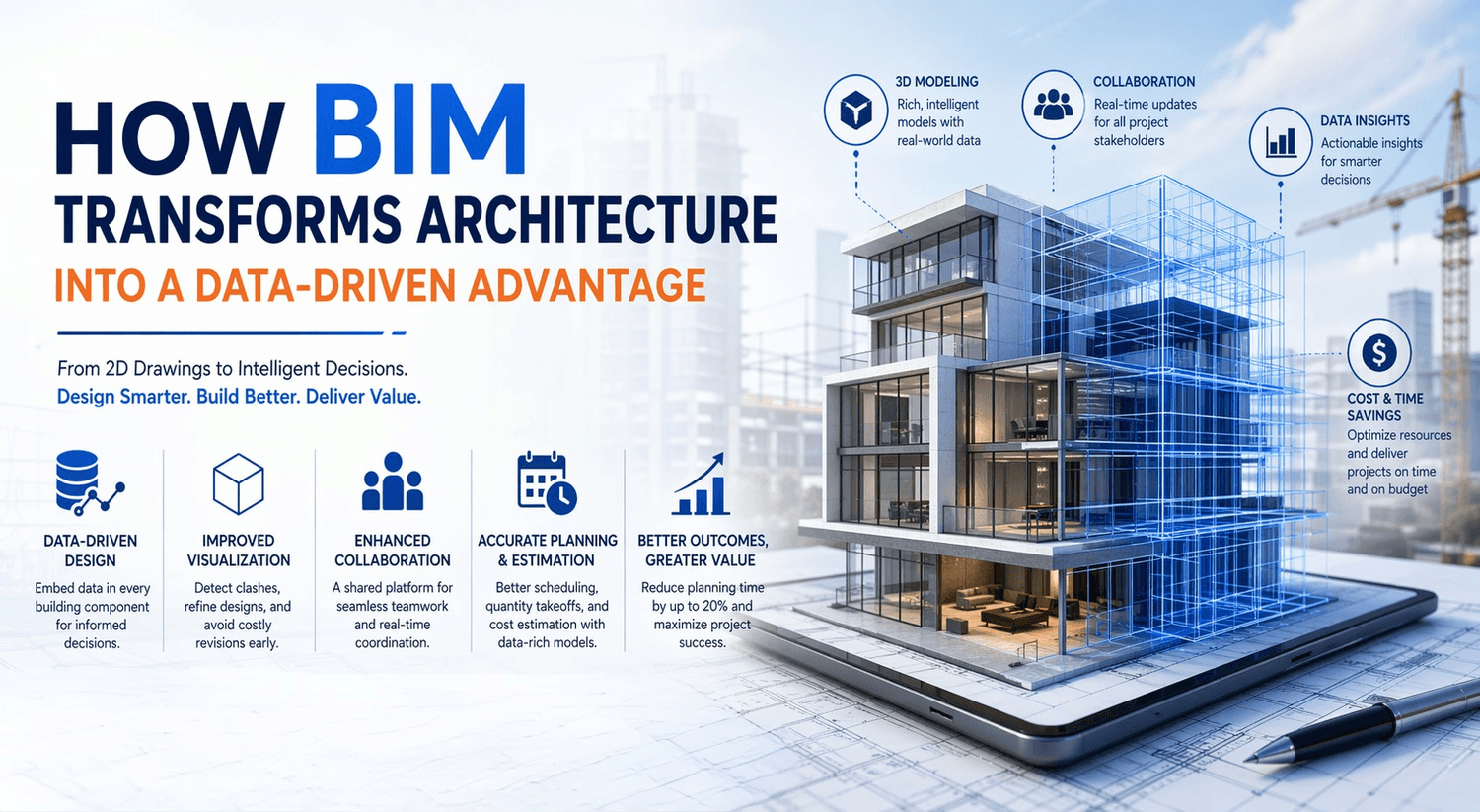
The traditional methods of construction were based on assumptions and experience rather than on accurate data. The limited availability of analytical tools forced every construction project to rely on overeducated project outcomes, resulting in design clashes, delays, misinterpretations, and cost overruns. Today, in the digital age, construction projects are increasingly becoming data-driven, driven by the emergence of BIM (Building Information Modeling). The architectural BIM services transform architecture from a 2D drafting-based process to a collaborative, data-driven, and intelligent 3D modeling methodology.
The blog unveils how BIM transforms architecture into a data-driven advantage:
Understanding Data-Driven Construction
Transcending the traditional construction methods that relied on manual drawings, documentation, and fragmented information exchange, data-driven construction utilizes digital technologies and data. This significantly supports informed decision-making and enhances project outcomes.
Data-driven Design Approach
The data-driven design approach in construction with BIM not only includes basic geometry but also shows detailed comminners data and project events. The architectural 3D modeling services embed data within every building's common components, including minute details such as doors, windows, and mechanical systems. This level of data detail helps architects analyze and refine designs with utmost precision.
Improved Visualization
BIM's 3D modeling capabilities revolutionize the visualization process. Project stakeholders can create dated, relational, and detailed 3D models that provide a comprehensive view of the project. This enables teams to detect potential issues, identify clashes, and make design adjustments early, avoiding costly project revisions.
Enhanced Collaboration and Communication
BIM serves as a shared digital platform that enables engineers, architects, contractors, and other stakeholders to collaborate seamlessly. It allows all parties to access the same up-to-date information, thereby minimizing conflicts and errors arising from inconsistent data. BIM modeling services enable real-time collaboration, where changes made are visible to all immediately, thereby enhancing coordination and improving overall project efficiency.
Conclusion
BIM's data-driven approach enables cost estimation, project scheduling, and accurate quantity takeoffs, supporting precise resource allocation and budgeting. With data-rich 3D models, architects can, on average, reduce project planning time by up to 20%, so what are you waiting for? Reach out to ASC Technology Solutions LLC for your next project. Their dedicated team creates data-rich BIM architectural models that support better decision-making throughout the design and construction phases.

© Created with systeme.io